



























Welcoming a child reshapes every part of life. During pregnancy, postpartum, and early parenting many parents experience not only love and anticipation, but also exhaustion, worry, loss, and shifts in identity. These experiences are more common than people realize — yet they often remain unspoken. One Greenville practice hopes to change that conversation. Reproductive Journey was founded by Greenville native and mother of four, Susannah Baldwin, and specializes in reproductive mental health.
Reproductive Journey, founded by Greenville native Susannah Baldwin, specializes in reproductive mental health. The practice provides counseling and support for individuals and families navigating some of life’s most vulnerable seasons.

Supporting Families Through Every Stage
Reproductive Journey focuses on the emotional and mental health challenges that can arise throughout the reproductive and parenting journey.
The practice works with individuals, couples, and families experiencing:
- Pregnancy and postpartum depression or anxiety
- Difficulty conceiving
- Birth trauma
- Pregnancy or infant loss
- Adjustment to parenthood
- Perimenopause and empty nest transitions

Clients can receive support through individual counseling, couples counseling, workshops, support groups, and occasional book clubs that help parents connect and learn together.
According to Baldwin, people seek help at many different points in their journey.
“Some clients come to us when they’re struggling to function day to day,” she explains. “Others function but feel like they’re surviving rather than thriving and want to feel better than just okay.”
A Growing Need for Specialized Mental Health Care
When Baldwin began her career more than 15 years ago, she quickly noticed a gap in reproductive mental health care.
Early in her career, she joined a birth center and began researching postpartum mental health statistics. She also searched for mentors who specialized in the field. What she found surprised her.
“There really weren’t any,” she said. “There was an enormous gap.”
Her interest in reproductive mental health eventually grew into a group practice. Baldwin first worked independently before founding Reproductive Journey about a decade ago. As demand increased, she expanded the practice and brought on additional clinicians.
Today, the practice also serves as a training clinic that helps develop the next generation of therapists specializing in reproductive mental health. Graduate student interns complete supervised clinical training at the practice and gain experience supporting families through these challenges.
This training model also helps expand access to care in the community. Therapy sessions with interns cost about $30 per session, which makes mental health care more accessible for families who might otherwise struggle to afford it.
Common Misconceptions About Postpartum Mental Health
Awareness of postpartum depression and anxiety has grown in recent years, but many misconceptions still exist.
One common belief is that these feelings will simply improve with time.
“Many people believe if they can just get through the postpartum period, it will resolve on its own,” Baldwin explains. “But more often it either gets worse or becomes part of how someone views themselves.”
Parenthood brings major identity changes. When anxiety or depression occurs during that transition and goes untreated, those feelings can become closely tied to how someone sees themselves as a parent.
Seeking support early can help prevent those patterns from forming and can improve well being for the entire family.

Navigating Faith and Mental Health
In the South, conversations about therapy often intersect with faith and spirituality. Many families rely on spiritual beliefs to make sense of life’s challenges.
At Reproductive Journey, therapists approach these conversations with openness and flexibility.
“We meet people where they are,” Baldwin explains. “Faith can be an important part of someone’s well being, but we don’t approach therapy through a specific religious lens.”
If a client finds strength in their spiritual beliefs, therapists can incorporate those conversations into care. If faith does not play a role in someone’s life, therapy focuses on other tools that support healing and growth.
The goal remains the same: create a space where clients feel respected and understood regardless of their background or beliefs.
Support Beyond Individual Therapy
In addition to individual and couples counseling, Reproductive Journey offers a variety of educational and supportive gatherings for parents and couples seeking connection and practical guidance. Offerings for 2026 include therapeutic book discussions, seasonal documentary film nights, and community events designed to reduce isolation and build community. A cornerstone program is the Gottman New Parent Relationship workshop series, a multi-session course for expectant and new parents that helps couples reduce conflict, stay emotionally connected, and work as a team while adjusting to life with a baby. These gatherings are welcoming, practical, and grounded in research, giving parents tools they can use right away while connecting with others navigating similar challenges. Many families participate alongside counseling, while others find these programs to be a supportive first step.
A Network of Care for New Families
Reproductive Journey also participates in a broader professional collective called Connected Journey. This sister organization brings together professionals who support families during pregnancy, postpartum recovery, and early parenthood.
Through this network, families can connect with services such as:
- Doulas
- Pelvic floor therapy
- Exercise specialists
- Midwives
- Birth and Infant Massage classes
- Other postpartum support professionals
This collaborative approach helps families access resources that support both physical and emotional well being during the transition into parenthood.
Why Seeking Help Matters
Many people think of therapy as something people seek only during a crisis. Counseling, however, can benefit families in many ways.
Mental health support can help parents:
- Strengthen relationships with partners and family members
- Increase confidence and self understanding
- Improve focus and productivity at work
- Feel more present and connected with their children
“When someone feels seen and heard in therapy,” Baldwin says, “it can create a generational upward cycle instead of a downward cycle.”
In other words, caring for a parent’s mental health positively impacts the entire family.
Finding Support
Support is available locally for families navigating infertility, pregnancy challenges, postpartum mental health concerns, or the transition into parenthood..
Reproductive Journey offers counseling services in person at its Greenville office and through secure video sessions for clients across South Carolina. The practice provides individual therapy, couples counseling, postpartum support groups, and educational workshops that help families feel more supported during major life transitions.
Upcoming Events Include:
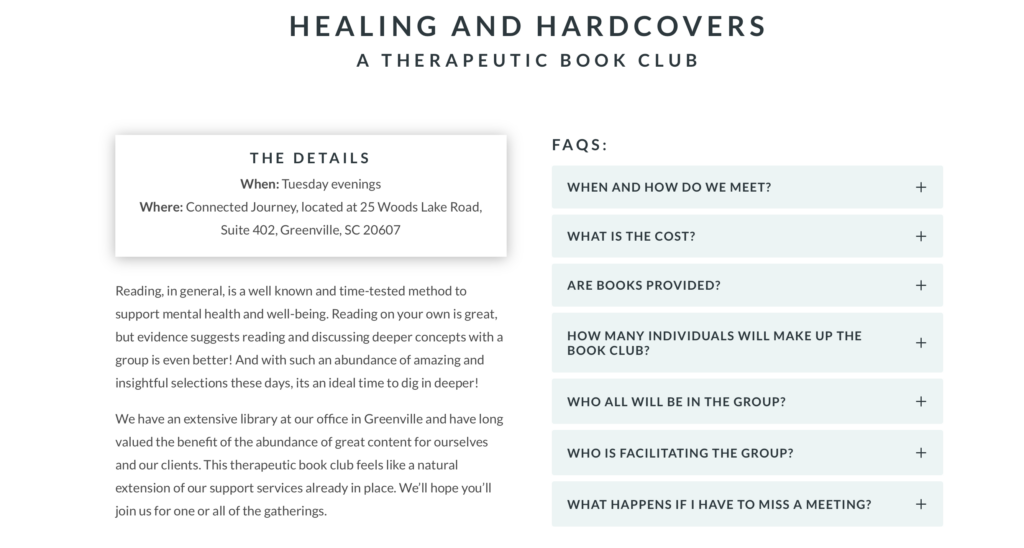
Reproductive Journey Book Club Website
Parents can learn more about services, upcoming programs, and available resources by visiting: