


























An Upstate conversation on maternal mental health — with four women working to make sure no mother walks it alone.
She buckles the car seat, double-checks the strap, and smiles at the baby in the rearview mirror. Then she sits in the driver’s seat for a minute too long. The grocery list is on her phone. The pediatrician’s number is in her contacts. The casserole is in the oven at home. And somewhere underneath all of it, a quieter question is running on a loop: Am I okay?
May is Maternal Mental Health Month, and across the Upstate, more mothers are asking that question than we’re talking about. Some are asking it out loud. Most are not.
I spoke with four Upstate women who spend their days holding space for the answer: Stormi Harmon, a Greenville-area doula and birth worker; Arialle Smith, founder of Momma Magnolia in Spartanburg; Susannah Baldwin, LPCS, PMH-C, founder of Reproductive Journey Counseling & Support and one of South Carolina’s earliest certified perinatal mental health specialists; and Amaris Gibson, LPC, PMH-C, IMH-E, founder of Queendom Come Coaching. Between them, they’ve spent years listening to what mother’s whisper in exam rooms and in the dim hours of postpartum. Their message — the one I hope you carry out of this article — is the same: what you are feeling is real, and it is worthy of care.
The Fear That Walks In Before Labor Does
Stormi has been noticing something heavy lately, sitting in the room with her clients before a single contraction begins. “Fear,” she says simply. A lot of it — and from two places.
There’s the very real fear of giving birth as a Black woman in a healthcare system that historically has not believed her pain. And there’s a newer fear: the algorithm. “All of the information that is given to us through our devices is algorithm-based,” Stormi explains. The more a mother watches, the more the feed gives her back — a steady scroll of Black women dying, being ignored, being taken to court during childbirth. Many walk into labor having absorbed dozens of strangers’ worst stories before they ever push.
It isn’t dramatic fear. It’s the kind that lives quietly in the body and waits. In her community, Stormi says, women carry three things from the moment they find out they’re pregnant: a desire to simply live and come home to their children; a hope of being able to breastfeed (even when family members haven’t done it or don’t support it); and a low-grade panic about childcare in an economy where the price climbs every week.
Arialle Smith — a doula based in Spartanburg and the founder of Momma Magnolia — names that first one in almost the same words. “The common fear of not making it out of birth,” she tells me. “Surviving postpartum has risks in and of itself, but even birth has become scary, particularly with C-sections — and understandably so.”
Stormi knows that fear from the inside. Her path into birth work began with her own pregnancy, where she experienced racism in her care: assumptions about her education, questions she wasn’t asked but answers she was given anyway. “I spent a lot of time reflecting on my experience in early postpartum,” she shares. “I decided I didn’t want other mothers to experience what I did if I could help it.”
The First Six Weeks Nobody Sees You
The moment that pushed Stormi into this work wasn’t labor. It was the silence after.
In the first 41 days — the traditional postpartum window of about six weeks — her newborn had multiple pediatric visits. Stormi had one. “Nothing in between,” she says. “So much can happen within those six weeks if you are not prepared or properly supported.” Things did happen. Hormonal shifts. Scary thoughts. Questions she was afraid to ask out loud. The medical world’s primary message to her? You can have intercourse again now. Everything else, she was left to figure out alone.
“There was no education on postpartum mood disorders. What was normal. What was beyond normal. None of that.”
This is the part of Stormi’s work that fuels her now. “How a woman is cared for the first 41 days after she has a baby will affect her for the rest of her life,” she says. Her healing. Her hormones. Her milk supply. Her marriage. The dynamics in her home. It all flows from those six weeks — the six weeks our culture mostly leaves her to navigate alone.
She talks often about restoring the village. In traditional cultures, she explains, the roles are quietly assumed — elders, aunts, cousins, sister-figures — and everyone knows their place. “We do not have that. That dates back to slavery, when those roles were stripped from us.” So today, she says, the village has to be created on purpose. “In our community, roles must be assigned, not assumed.” A best friend with availability. A neighbor willing to bring a meal. A partner being properly educated. A doula.
A village built on purpose is still a village.
The Things We’ve Quietly Agreed to Call Normal
When Amaris hears stories like Stormi’s clients’, she names what so many mothers can’t quite name for themselves. “One out of five women — and one out of ten dads — will experience postpartum depression,” she explains. Perinatal mood and anxiety disorders, or PMADs, are now the leading cause of maternal mortality. Read that again. The leading cause.
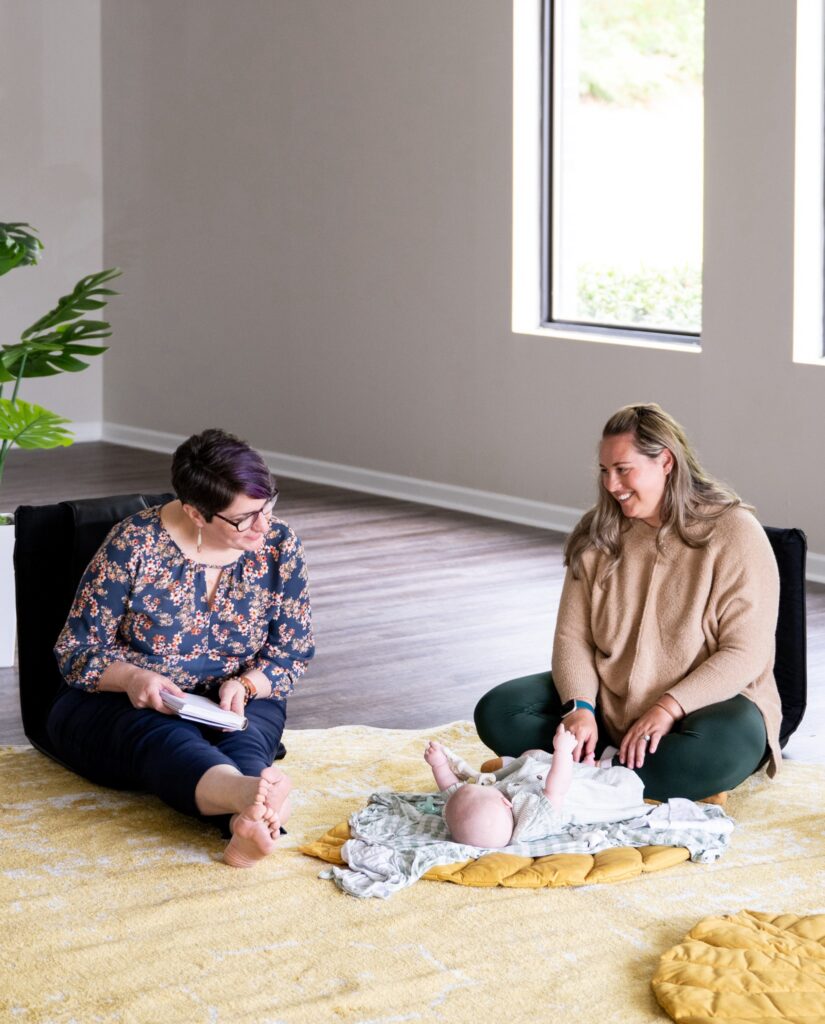
And still, so much of what mothers are feeling gets folded into “this is just motherhood.” Amaris lists what shows up on her couch:
- Persistent irritability or rage
- Feeling disconnected from your baby
- Intrusive or scary thoughts
- Grief over how birth or early parenting unfolded
- High-functioning anxiety masked as “doing everything right”
“We’ve normalized maternal suffering,” she says, “to the point where many women don’t realize they deserve to feel supported, regulated, and emotionally safe.”
“But It’ll Pass… Right?”
For most of the Upstate mothers who eventually find their way to Susannah Baldwin’s practice, that question is the trap door. “The biggest misconception,” she tells me, “Is that it’ll get better on its own.” Most folks think they’ll just outlive the postpartum get the baby to toddler or preschooler and the heaviness will lift on its own.
It usually doesn’t. “It’s much more likely it’s going to get worse, or it’s going to fold into the way you live your life, which is what we really don’t want.”
That folding is the part Susannah cares about most. The postpartum season isn’t just a hard chapter; it’s a season when a woman’s identity is actively being rebuilt. “If we have symptoms while our identity changes,” she says, “it gets folded into how we think of ourselves.” The anxious mother becomes the anxious self. The irritable mother becomes the irritable wife, the irritable friend, the irritable boss. Years pass, and no one ever quite names it.
Susannah has served women and families in the Upstate for more than 15 years. A Greenville native, she originally imagined supporting women through midwifery, but her path ultimately led her to reproductive mental health through a blend of serendipity, connection, and deep curiosity about women’s emotional wellbeing. Early in her career, she joined a birth center as a new clinician and quickly recognized the significant gap in specialized perinatal mental health support in the region. With few mentors or resources nearby at that time, she built a practice to fill that need. Today, through Reproductive Journey Counseling, she and her team support clients across the full reproductive spectrum, from those struggling to function to women who quietly wonder, “I’m okay, but I’m not thriving – I’m surviving” Reproductive Journey holds space for both.
When Not Being Heard Becomes the Trauma
Arialle has watched this play out from inside birth rooms for years. “Not feeling seen or heard is traumatic,” she says. “Making a woman feel like she has to be obedient or silly for asking questions is devastating especially when she’s already a little afraid.”
Trauma, she echoes from Amaris, isn’t only what happens medically. It’s what happens to you while it’s happening to you. A vaginal check that doesn’t account for a history of sexual trauma. An induction recommended at 39 weeks based on a single, much-debated study. A nurse pushing formula into your baby’s bottle two hours after birth when you’ve clearly said you’re breastfeeding.
That last one isn’t theoretical… it happened to Arialle. So did being labeled a “dirty baby” by a hospital, a term a nurse later admitted came from administrators, because Arialle had given birth outside their system. These are the small, lasting cuts that turn a birth story into something a woman avoids retelling. They’re also, in Arialle’s words, the reason she does the work she does.
For her, the antidote is preparation. “A failure to plan is a plan to fail.” She coaches her clients to approach pregnancy like a marathon — nourishing the body, educating the partner, learning their rights, understanding that shared and informed decision-making is something they’re entitled to, not something they have to earn. “Medicine has its place,” she says, “but there is also space for mom’s intuition.”
Stormi puts the same idea bluntly: “If you don’t know your options, you don’t have any.”
Why So Many of Us Stay Quiet
There’s a deep cultural script that motherhood should feel natural, joyful, and fulfilling. When reality doesn’t match the script, Amaris says, women tend to assume they are the problem. So, they stay quiet. They smile at the rearview mirror.
In the Bible Belt, that silence often comes wrapped in a different ribbon: pray harder, trust more, give it to God. Faith is real, and Susannah is quick to say her practice meets clients exactly where they are on that. “Faith is an important part of well-being,” she explains, and her team is well equipped to honor it. But she’s also clear that not every season can be prayed through alone. Therapy and faith aren’t a contradiction. They can sit in the same room.
For Black mothers, the silence carries even more weight. Amaris speaks plainly: dismissed pain, the “strong Black woman” narrative, fewer providers who reflect their experiences, historical mistrust of medical systems, and the very real fear of being reported instead of helped. There’s a word she uses — weathering — for the physiological toll of moving through a world that doesn’t always see you. It shapes pregnancy, delivery, postpartum, and beyond.
And Stormi names what that looks like inside a chart note. “I’ve seen similar complaints made by women who are not of color,” she says, “and they are heard, and interventions are sought out while women of color are often simply sent home.”
What Real Support Actually Looks Like
The encouraging part, Amaris says, is that healthy support is not a mystery. It’s specific. It’s someone asking how she is doing, not just how the baby is doing. It’s a meal. It’s an hour of rest. It’s a friend who lets her tell the birth story out loud without rushing her to the silver lining.
It’s also, in Arialle’s words, a team. “Childbirth education, lactation education, doula support, chiropractic care, mental health specialist — these are essential investments.”
It’s a doula like Stormi or Arialle, preparing the family ahead of time so that when the unexpected pivot comes, the language for it is already in the room. It’s a therapist like Susannah or Amaris, trained in perinatal mental health, who can hold the hard moments long after the baby is home.
When a mother finally lands in a space like that, Susannah says, something quietly shifts. “It’s hard not to be teary-eyed about it,” she told me. “It feels like a generational upward cycle instead of a downward cycle.” That, in her words, is the whole point: not just one woman feeling better, but a family — and a next generation — getting a different start.
If you are reading this and recognizing yourself somewhere in these lines, please hear what Amaris said when I asked her what she would tell a mother who feels unseen: “Motherhood is a major transition — emotionally, physically, and relationally. You are allowed to need care within it. Trust that what you’re feeling is real and worthy of care.”
And hear what Arialle said when I asked her the same: “You run this ship. Own it unapologetically. You are paying for a service, and you have a right to ensure that you get the best experience in the safest way possible.”
You don’t have to wait until things feel “severe.” Small steps count. Talking to someone you trust counts. Getting screened for PMADs counts. Asking your provider, “Can we slow down so I can make an informed decision?” counts.
And here in the Upstate, you don’t have to go looking very far.
Where to Begin: Local Support for Upstate Moms
Reproductive Journey Counseling & Support — Founded by Susannah Baldwin, LPCS, PMH-C, with more than 15 years of expertise.
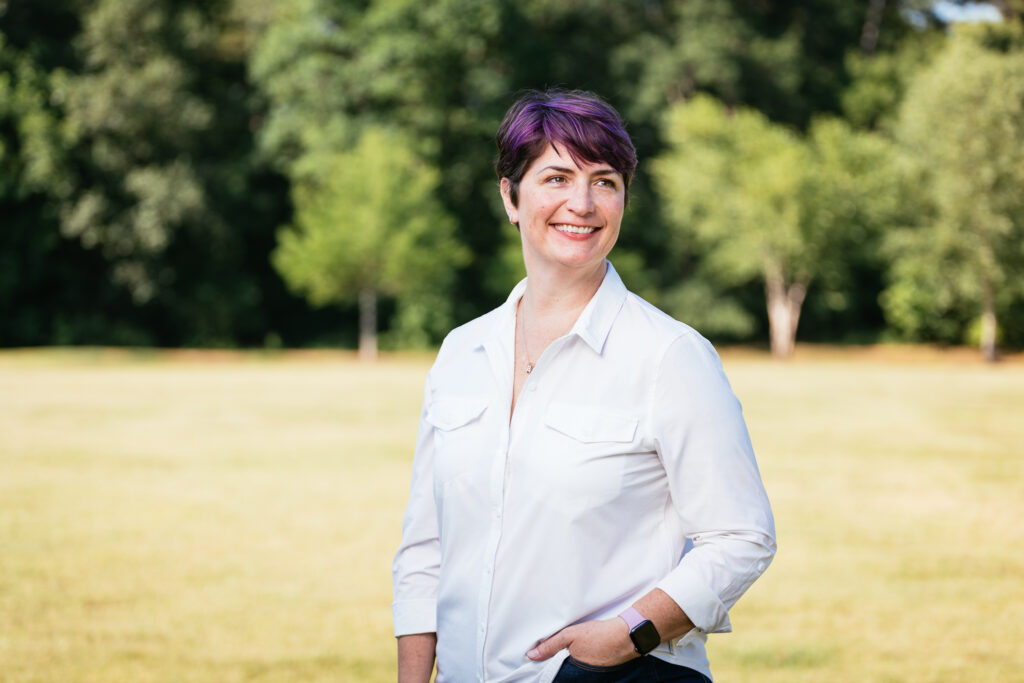
Reproductive Journey offers compassionate, evidence-based care across fertility challenges, pregnancy, postpartum, birth trauma, pregnancy or infant loss, adjustment to parenthood, and perimenopause. The practice meets clients where they are (including on matters of faith) and supports partners and couples as well.
New clients can book a free introductory consultation. Reproductive Journey also offers $30 student intern sessions, expanding access for families who need it.
Reproductive Journey is also part of Connected Journey, a collective of paraprofessionals — doulas, pelvic floor therapists, midwives, exercise specialists, and infant massage instructors — who wrap around clients across their whole maternal journey.
Visit: reproductivejourney.com
Read more: Reproductive Journey Counseling & Support on Kidding Around Greenville
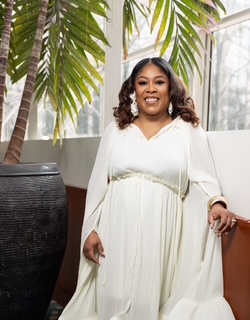
Queendom Come Coaching, LLC — Founded by Amaris Gibson, LPC, PMH-C, IMH-E. Specialized care for perinatal mood and anxiety disorders, birth trauma, and the early parent-baby relationship.
Visit: queendomcomecoachingllc.com
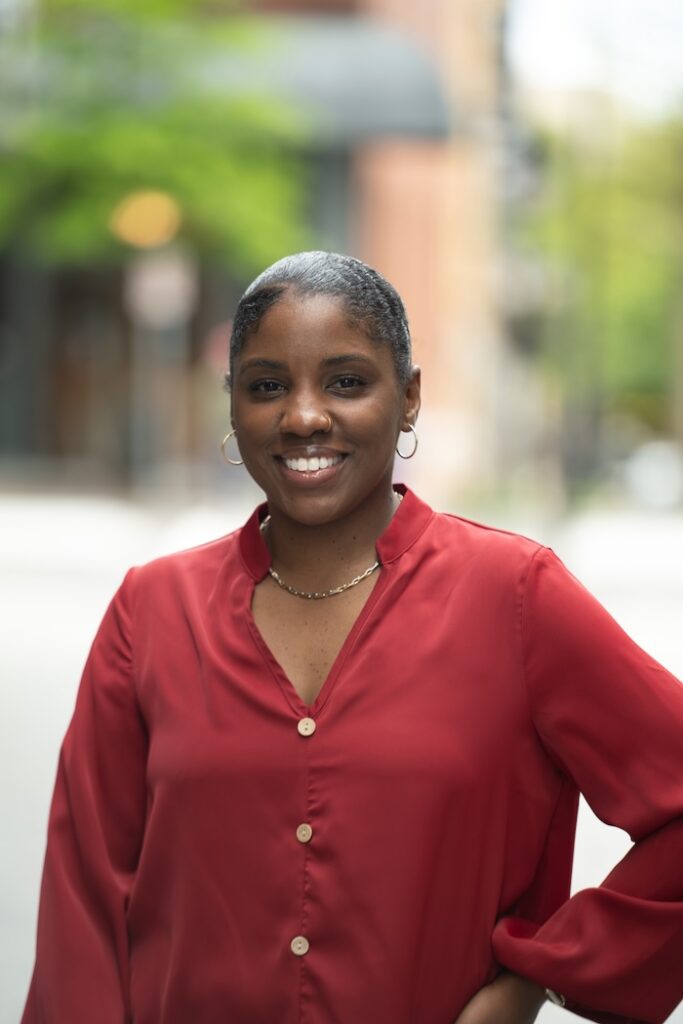
Stormi Harmon – Live To Serve Co.
Greenville-area doula and birth worker focused on advocacy, education, and restoring the village for Black mothers and families across the Upstate. https://www.live2serve.co
If you are in crisis, please call or text 988, or reach Postpartum Support International at 1-800-944-4773.
Founded by Arialle Smith, a Spartanburg-based doula focused on empowered, informed birth experiences. Arialle prepares families ahead of time so they can advocate for themselves through pregnancy, labor, and early postpartum. https://www.mommamagnolia.com
If you are in crisis, please call or text 988, or reach Postpartum Support International at 1-800-944-4773.