Looking to visit black history sites in Charleston, SC? Or maybe looking to learn more about Charleston black history? Charleston is a beautiful city, and it is also a place where history runs deep. Across the city, museums and historic sites tell the story of Black life in Charleston, including the brutal realities of slavery in South Carolina and the lasting impact that history still has today.
We recently visited Charleston and put together this list of Black history sites you can explore whenever you are in the area. Each stop offers a chance to learn, reflect, and better understand the people and stories that shaped the city.
In the past three centuries, Charleston has seen its fair share of atrocities, both natural and man-made. The city has lived through war, a devastating fire in 1838 that destroyed more than a quarter of Charleston, and an 1886 earthquake that damaged or leveled more than 2,000 buildings. It was also through the port of Charleston that nearly half of all enslaved Africans entered the United States. Even today, we can still see traces left behind by the men, women, and children who put their blood, sweat, and tears into building the city we know today.
Philadelphia Alley
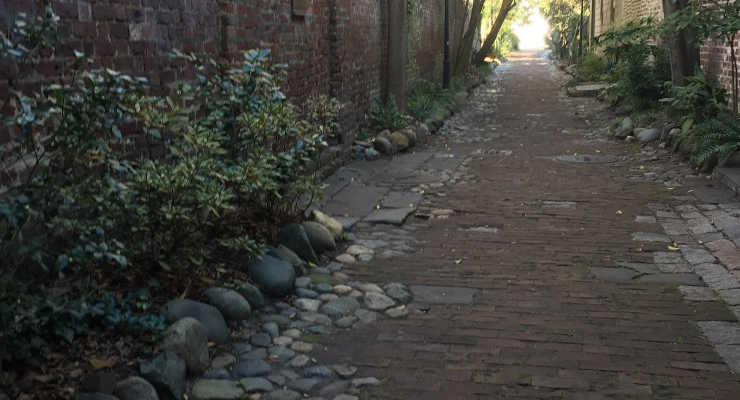
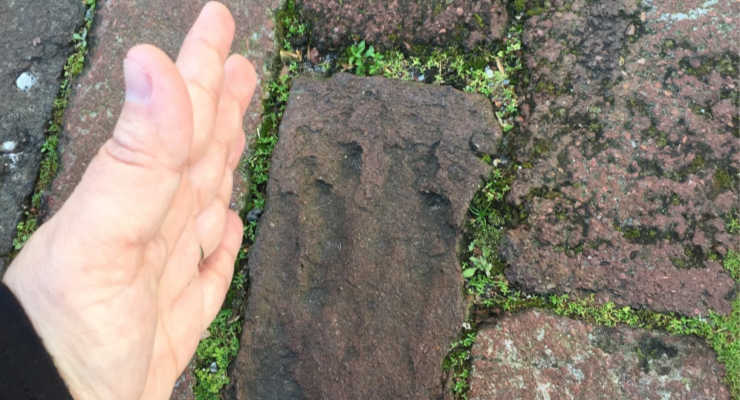
Located in the French Quarter area of Charleston, Philadelphia Alley is a hidden gem and one of my favorite places in the city. As you walk the alley, look closely at the brick-paved street. You might catch a glimpse of the handprint of the person who created the bricks back in 1776. Many of the plantations in Charleston County produced bricks. Handprints and fingerprints were forever captured in the clay when the bricks were handled too soon. You can find these bricks can be found all over the city.
Not taking into account that this alley is allegedly haunted, it’s hard to not feel the presence of those who came before. Especially when you lay your hand in theirs. One of the most emotional things for me was that a good deal of the handprints was smaller than those of my seven-year-old son’s.
Philadelphia Alley
22 Queen Street
Charleston, SC 29401
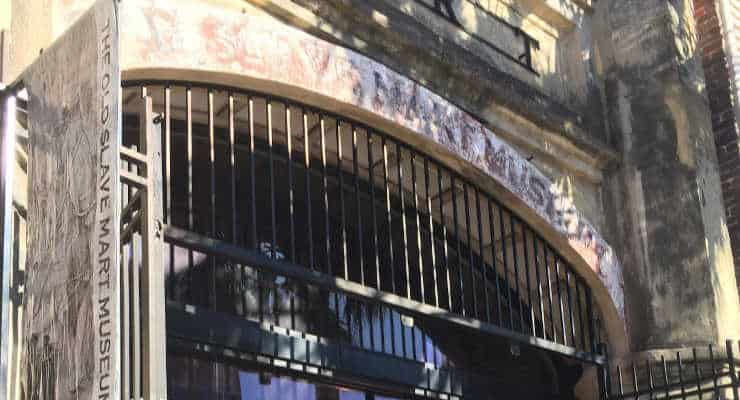
The Old Slave Mart Museum
A walking distance away from Philadelphia Alley, you’ll find The Old Slave Mart Museum.
It’s exactly what it sounds like. This building is thought to
be the only known slave auction house left in existence.
In the 1850s, a man named Thomas Ryan ran a slave brokerage house here. The opening of the business was a direct result of the city ordinance passed in 1856 that prohibited the practice of “public sales”, with the last sale occurring there in November of 1863. The museum contains items dedicated to the African-American history of Charleston and the enslaved people who passed through it. Autobiographical recordings of some of those people are included in the exhibit.
While very educational, I do not think my toddler would have been content while visiting this museum. The exhibit consists mostly of artifacts and a lot of reading information related to them. I suggest touring it with school-age children for that reason. The museum is closed on Sundays, and admission is $8 per person. Children 7-12 are $5.
The Old Slave Mart Museum
6 Chalmers Street
Charleston, SC 29401
843-958-6467
Fort Moultrie and the Bench By The Road
Adjacent to the port of entry that so many enslaved people came through, sits a bench. The bench was placed in the park in 2008 in partnership with the late Nobel Laureate Toni Morrison. She sought to provide a place where people could go and contemplate slavery. It is one of several around the world.
The Fort Moultrie Museum includes an exhibit on the enslaved people of Charleston. “African Passages” details what would happen once a person arrived on our shores. The exhibit also introduces you to a young girl stolen from her home in Sierra Leone. The ten-year-old, Priscilla, was brought here in 1750. Miraculously, her ancestors were able to trace their roots back to her. Over 250 years later, a descendant of the young slaves, a teacher from Charleston, was able to travel back to Sierra Leone and meet her distant relatives.
Admission is currently $10 per adult, age 16 and over. The annual pass is a better deal if you have four adults in your group. For $35, the passholder and three adults will have a year’s access to the park. Fort Moultrie is open daily from 9 am – 4:30 pm.
Children under 15 are admitted for free at this park, but if you have a fourth-grader don’t forget to take advantage of the National Parks “Every Kid in a Park” program.
Fort Moultrie
1214 Middle Street
Sullivans Island, SC 29482
843-883-3123
Plantation Tours
There is plenty to do and see for visitors of all ages on the plantation tours. However, due to the admission prices I suggest only visiting if you have the day to dedicate to them.
Middleton Place Plantation
This 65-acre, former rice plantation includes America’s oldest landscaped garden. Those gardens include the first Camellias planted in America. Tours of the gardens are included with general admission. On Sundays and in February, the plantation will offer a 30-minute program called – “LEST WE FORGET. . . A STORY OF THE AFRICAN AMERICAN EXPERIENCE”. This storytelling and musical program focuses on one woman’s life as an enslaved person in South Carolina.
The grounds include a restaurant, so one could easily spend the day there. The free-roaming livestock and stable yards will be a favorite of the children in your family. The gates are open daily for entry from 9 am – 5 pm, with guests permitted to stay until dusk.
Admission for adults is $32. College students with ID are $15. Children ages 6-13 are $10. Children five and under are free.
Middleton Place Plantation
4300 Ashley River Road
Charleston, SC 29414
843-556-6020
Drayton Hall
This plantation is located on the Ashley River in North Charleston. It’s unique because it’s the only riverside plantation to survive both the Revolutionary and Civil Wars. It is thought that the home was built sometime in between 1738 and the early 1750s. Admission includes access to Drayton Hall, The Nature Trail, The Lenhardt Garden, the Caretaker’s house, and the African American Cemetery. Very few gravestones remain in the cemetery. The majority of the gravestones were made of wood, cloth, or marked by plants, for those who were fortunate enough to receive gravestones. Drayton Hall is another location where you can see bricks with handprints.
There’s also a combination ticket package that includes admission and a tour to both Middleton Place and Drayton Hall. Allow five hours for the experience. The cost is $50 per adult and $16 per child.
Drayton Hall is closed on Tuesdays, but open every other day of the week from 9 am – 4:30 pm. Admission for adults is $32. Children ages 7-15 are $15. Children under seven are free.
You can save $3 by registering online in advance. Tickets are available at the gate but the gate will accept no cash transactions.
Guided house tours are one hour long and are at 10 am, 11 am, noon, 1 pm, 2 pm, and 3 pm.
Drayton Hall
3380 Ashley River Road
Charleston, SC 29414
843-769-2600
More to See in Charleston for Black History Month
Here are some other places to visit and tours to consider while exploring Charleston during Black History Month or any time of year.
Mother Emmanuel AME Church
110 Calhoun Street
Charleston, SC 29401
843-722-2561
Charleston City Market
Find a variety of hand-woven sweetgrass baskets at the market. Well-known in the Gullah culture, sweetgrass baskets were brought here from Africa.
188 Meeting Street
Charleston, SC
843-937-0920
Old Charleston Jail
This is the Old City Jail that operated from 1802 until 1939. Several well-known slaves were held there, including Denmark Vessey and Lavinia Fisher.
21 Magazine Street
Charleston, SC
Gullah Tours
375 Meeting Street
Charleston, SC 29403
843-763-7551
College of Charleston Library (graveyard behind it)
205 Calhoun Street
Charleston, SC
843-953-8000
Bethel United Methodist Church (graveyard next to it)
57 Pitt Street
Charleston, SC
Frankly Charleston Black History Tours
375 Meeting Street
843-834-2003
Cabbage Row
Cabbage Row is a set of pre-Revolutionary houses that sits between 89-91 Church Street. The families of freed slaves lived in these houses, and they sold cabbage from their windows.
89-91 Church Street
Charleston, SC
McLeod Plantation Historic Site
325 Country Club Drive
Charleston, SC
843-762-9514
Aiken-Rhett House
48 Elizabeth Street
Charleston, SC
843-723-1159
Philip Simmons House
30 1/2 Blake Street
Charleston, SC
843-723-1259
Mount Zion AME Church
5 Glebe Street
Charleston, SC
843-722-8118
Looking for more to do in Charleston? Read Kidding Around’s Guide to Charleston. We share things to do, where to stay, and places to eat.
Have you visited any of these sites? Do you know of a site we should include on this list? Let us know in the comments!